
Design Assignment
How do we love all the children of all species for all time?
Photo: Ako Tampo
The mission
Intergenerational Design
Our Focus
Geothermal Possibility
The warmth beneath us is one of the great possibilities of this moment.
It localizes power, asks nothing of the sky, and runs through the night. It is not yet scaling as quickly as it could to create the longest-term benefits for future generations. The Institute is working to bring that possibility into view, and into use.
Cradle to Cradle at 25
A book that proposed waste could be food, returning at twenty-five.
At a moment when a sense of possibility is needed again, the Institute is bringing its questions back to life. They help us think across our own sectors and industries, and within them, to ask how we might design things so that future generations can continue to enjoy this place.
Fifty years of questions of possibility
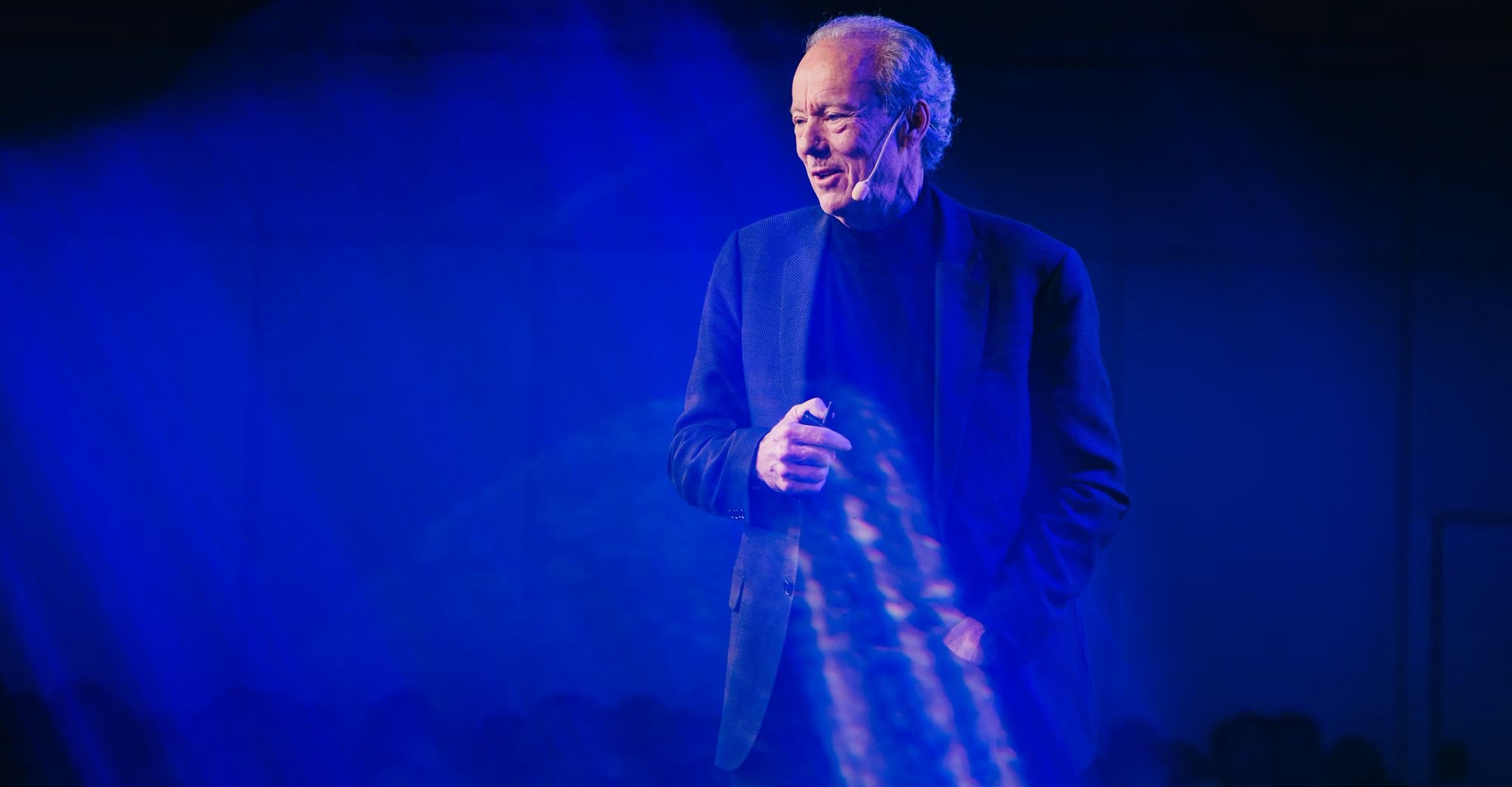
For fifty years, Bill has begun by asking what might be possible.
Some questions became buildings. Some became principles. Some became a book people carried into their own work. The lesson is not certainty. It is that a question, held with care, can invite people to make the next answer visible.
A solar-heated house in Ireland
Could a house gather its comfort from the sun?
William McDonough designed the first solar-heated house in Ireland in 1976, a question made habitable.
The first green office in New York
Could a workplace start with air people could trust?
For the Environmental Defense Fund's New York offices in 1984, Bill and team made indoor air quality a design requirement.
Could a world's fair begin with design principles for all children, all species, all time?
The Hannover Principles gave that invitation a language people could carry.
Could one of the most industrial sites in America become visibly alive?
At Ford Rouge, ten acres of sedum turned a roof into a working landscape.
Could the things we make become nutrients for what comes next?
Cradle to Cradle made that question portable across products, buildings, and industries.
Geothermal, China and beyond
Could the earth's heat help answer the energy question attached to the knowledge age?
That question now belongs to this next chapter, and to the people prepared to shape it.

Geothermal Possibility
All sustainability is local. So is energy. Could the heat beneath us power what we build here?
Questions that belong together
What if the warmth beneath us is one of the great possibilities of this moment?
Business
What would make power generated in place worthy of investment at every scale?
Ecology
Could the way we make power leave soil, water, and living systems better than we found them?
Land
Where does energy belong, and who is present when that question is answered?
Governance
What kind of agreement could hold across a project, a community, and a generation?
Questions, not positions
- What if the answer is not out, but in?
- What could a community do when it can point to the source of its own power?
- What forms of prosperity become possible when energy belongs more deeply to place?
Where the work is focused
Effectively scaling geothermal globally, with a variety of stakeholders playing important roles.
This is not a portfolio of small projects. It is a systemic rollout, aligned to a vision of geothermally powering the whole world. The aim is to scale geothermal effectively, and that takes a variety of stakeholders, each playing an important role: the companies advancing the technology, the capital that funds it, the property owners and developers whose land and load the heat runs beneath, and the communities and public partners it would serve. The role here is to advance the conversation, to participate where it matters, and to convene the connections between these stakeholders where they are needed.
Companies advancing the technology
Operators and technology companies building geothermal into the grid and into the next economy.
Investors and capital
The capital that turns a proven question into a system that scales.
Property owners and developers
The land and the load the heat runs beneath, at the scale of a system.
Communities and public partners
The places and the people geothermal would serve, whose role in the rollout is real and consequential.
Cradle to Cradle at 25
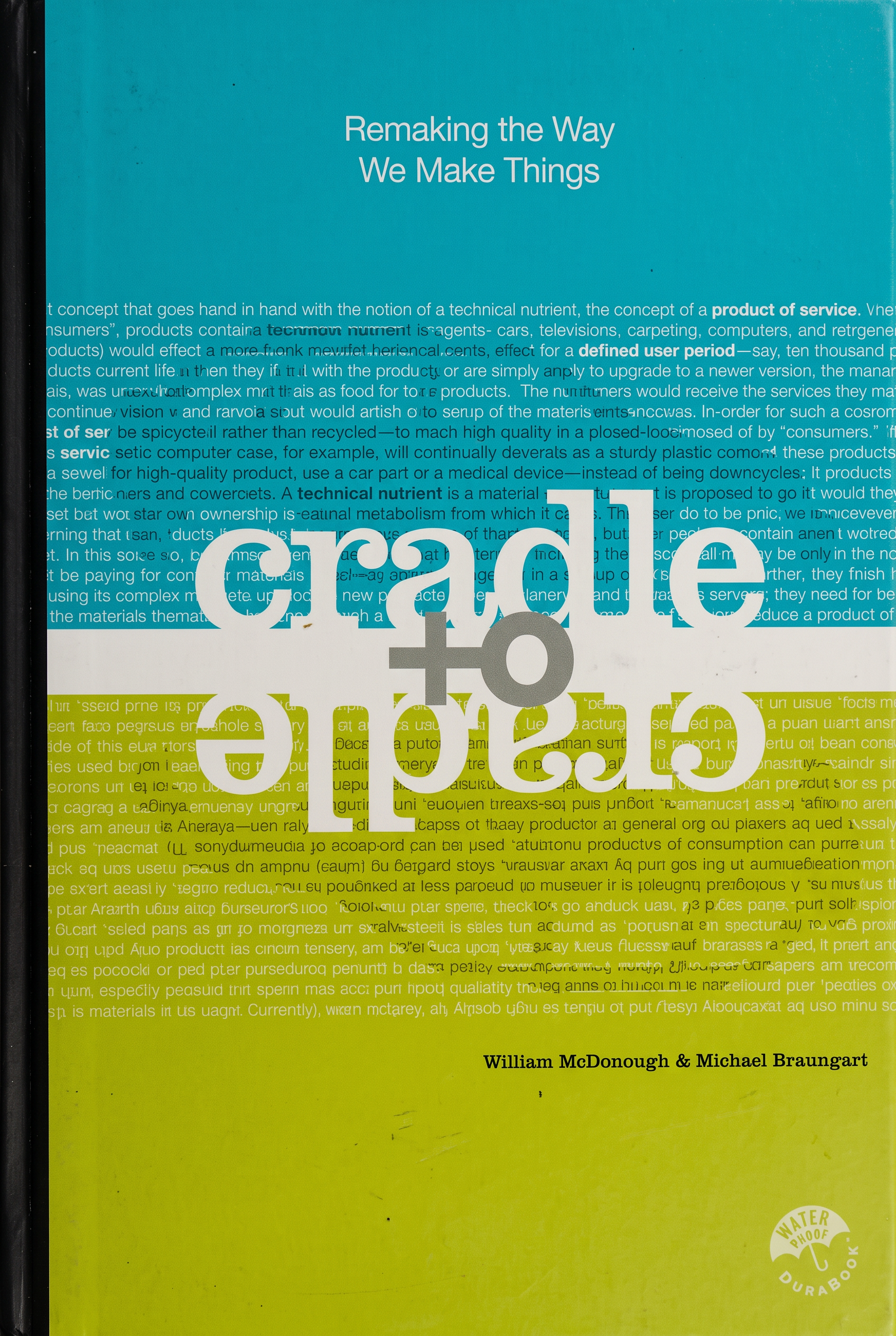
Twenty-five years ago, a book proposed that waste could be food.
Cradle to Cradle: Remaking the Way We Make Things returns in 2027. The landscape around climate, industry, finance, and materials has changed. The design assignment has become newly alive.
What might become possible if we return to first principles, not as positions to defend, but as questions to put to work?
If Cradle to Cradle opened a door in your work or your life, we would love to hear what became possible. Share your story, or read the stories shared so far.
Questions, not positions
- What if waste were a beginning?
- What if self-interest became material for shared design?
- What if industry began again with delight in what things can become?
Where the ideas have traveled
A book people carried into their own work.
Product design
Method, Herman Miller, and others put the nutrient cycles to work in things people use every day.
See itIndustry certification
The Cradle to Cradle Certified program, donated to a nonprofit institute, now guides thousands of products.
See itLiving architecture
The Ford Rouge living roof turned an industrial site into a working landscape.
See itA language for carbon
Carbon Is Not the Enemy gave the cycle a vocabulary people could carry into policy and design.
See itIdeas
Fifty years of talks, writings, and conversations.
Lectures, interviews, broadcasts, and essays, kept as a resource you can return to whenever a question here sends you looking for more.
Stories from the cradle
What did the book inspire for you?
A building, a product, a career, a way of seeing. If Cradle to Cradle opened a door in your professional or personal journey, we would love to hear what became possible. Share it in words, add photographs, or record a short video.
The anniversary page gathers the stories people have shared, Bill's letter for the anniversary, and the 2027 anniversary edition of the book.
Different perspectives can reveal possibilities no one sees alone.
Enter the conversation
What could your perspective add to the conversation?
If these questions meet work you are already carrying, we invite you to talk with us. You can support the Institute directly through our Bloomerang giving page. If you are considering a grant, a planned gift, or another form of contribution and would like to talk it through, reach rpetersen@mcdonough.institute.